

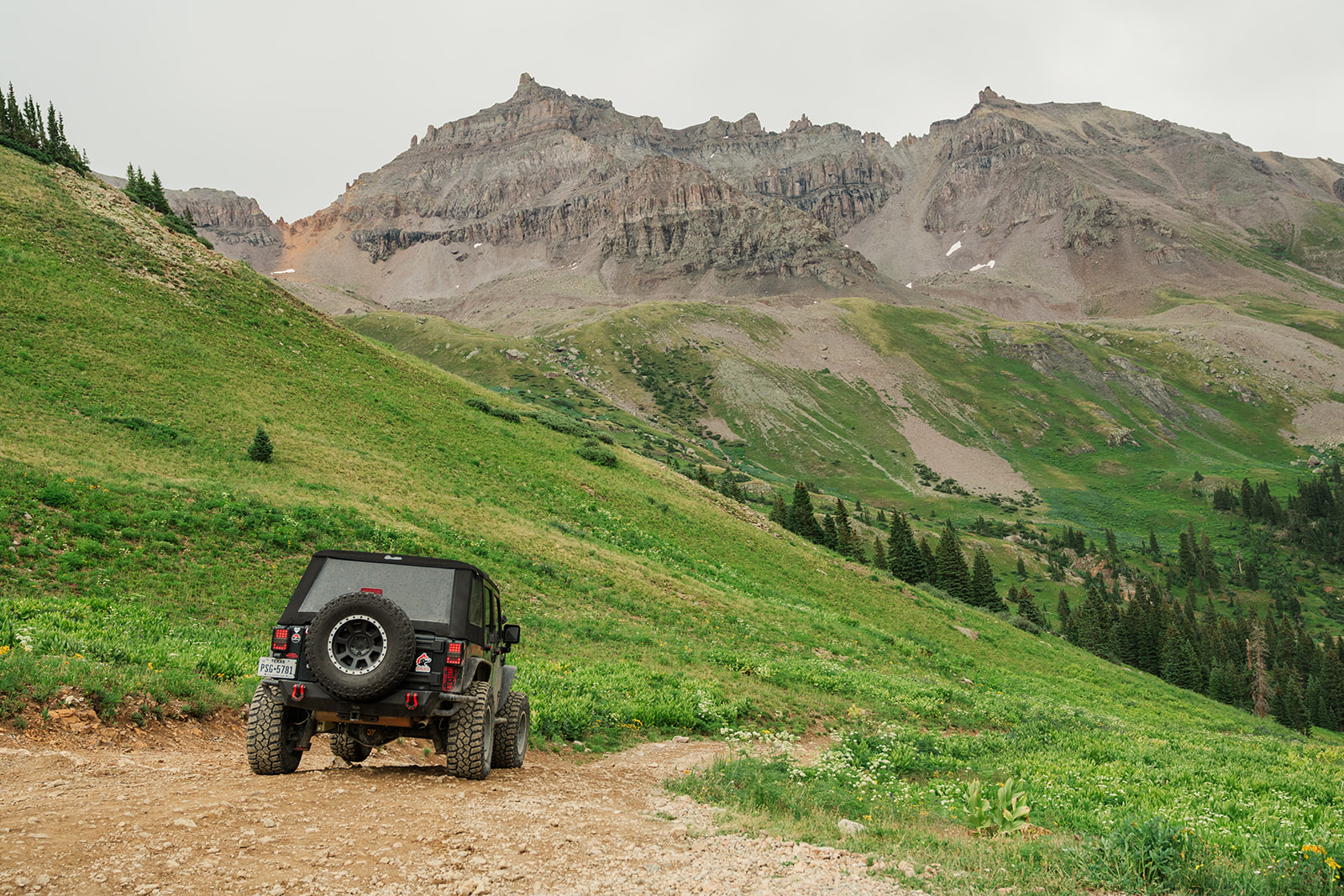

How to Plan an Off-Roading Elopement
Why Go Off-Roading During Your Elopement?
I talk to a lot of couples about why they want to elope in nature, and the same themes come up over and over: privacy, serenity, and amazing views.
And the secret to achieving these things during your elopement? Getting wayyy out into the wilderness!
There are lots of ways to do this, of course – hike-in elopements are incredibly popular, and you can even find great views at roadside spots. But off-roading to your elopement locations creates another barrier between you and the rest of the world. One of the best places in Colorado to plan an off-roading elopement is in the San Juan Mountains!
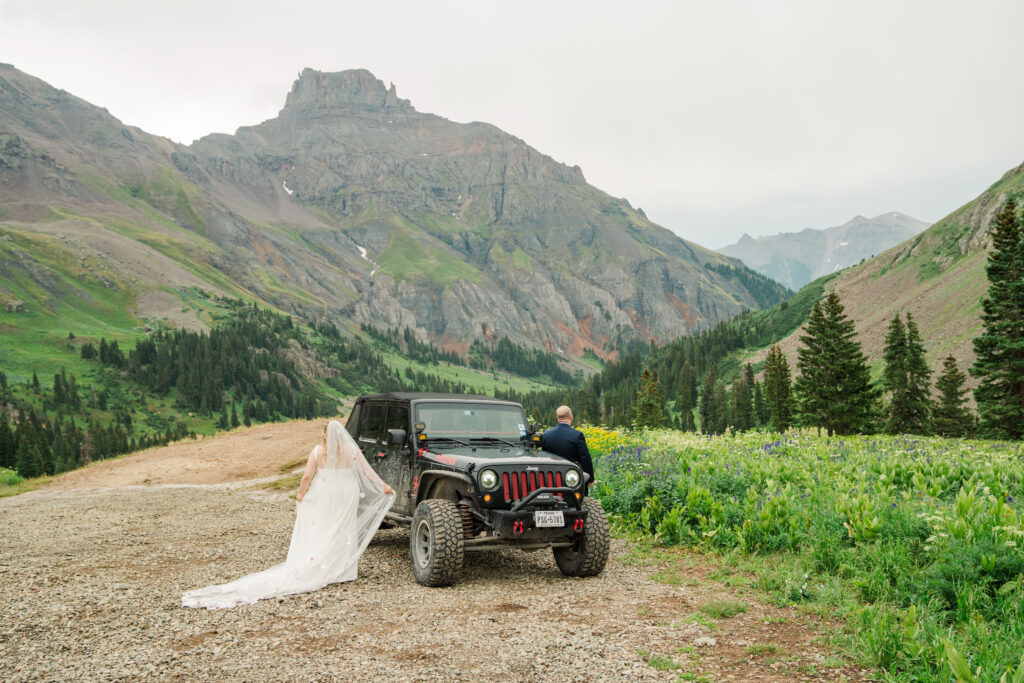
With an off-roading elopement, you can reach places (and views) you truly can’t get to any other way – places that are too far to hike to and unreachable on paved roads. That means even more privacy than a pretty overlook, or even the end of a hiking trail!
And off-roading is an adventure in and of itself! Seriously, off-roading is unlike any road trip you’ve ever taken, and a really fun way to spend an afternoon.
If you’ve never been off-roading before, it can definitely seem a little intense (maybe even a bit scary). But with the right planning, there’s no reason to feel intimidated. And I’ve got all the info to help you plan a safe, fun, confident off-roading elopement!
Table of Contents
- Who is an Off-Roading Elopement Perfect For?
- When Should You Have an Off-Roading Elopement?
- Understanding Different Types of Off-Roading Trails
- Important Off-Roading Terms to Know For Your Elopement
- Driving Yourselves vs. Hiring an Off-Roading Guide
- How to Leave No Trace During Your Off-Roading Elopement
- What to Wear for an Off-Roading Elopement
- Important Safety Tips for Off-Roading Elopements
- Sample Off-Roading Elopement Timeline
- Off-Roading Elopement FAQs
- Why Hiring a Local Planner Matters for Your Off-Roading Elopement
Who is an Off-Roading Elopement Perfect For?
First things first, before we get into planning an epic elopement day: is an off-roading elopement right for you?
Off-roading elopements are perfect for couples who…
- Love adventure and trying new activities together
- Are comfortable with a little bit of unpredictability
- Want to experience remote places, without hiking miles and miles
Off-roading elopements are not ideal for…
- Elopement days with large guest counts
- Anyone terrified of heights
- Couples who want a more “polished” elopement spot with fully paved access
What if off-roading feels scary?
One big thing that holds a lot of couples back from choosing an off-roading elopement is that off-roading can seem a little scary.
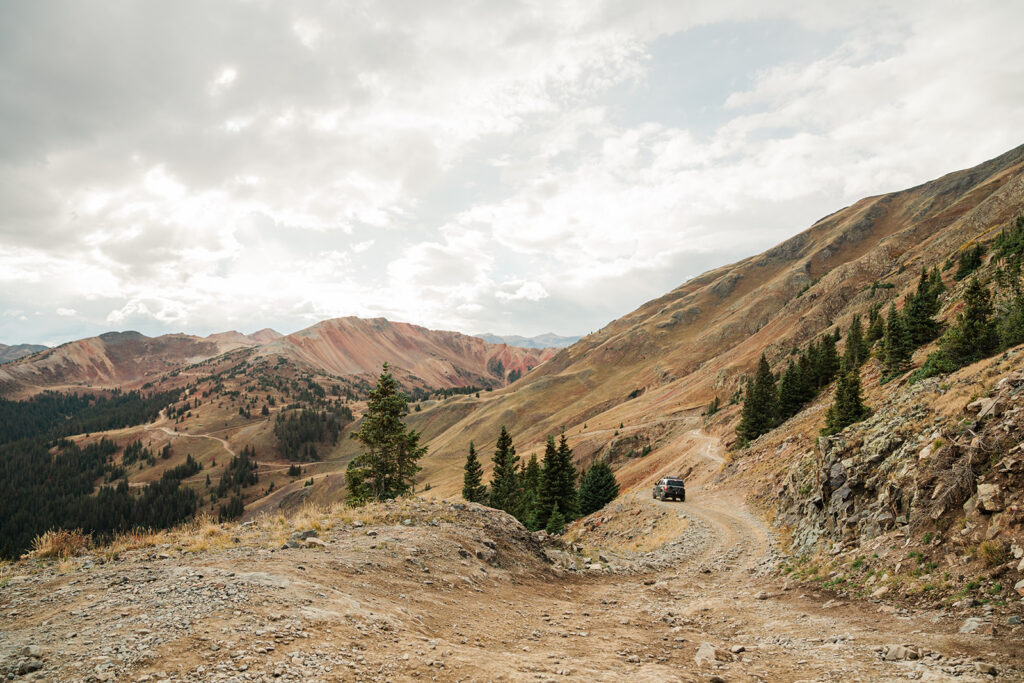
And I totally get it! There are some inherent risks and common fears involved in off-roading: heights (especially along narrow shelf roads), scraping your vehicle on rocks, getting stuck in the middle of nowhere, and unpredictable weather.
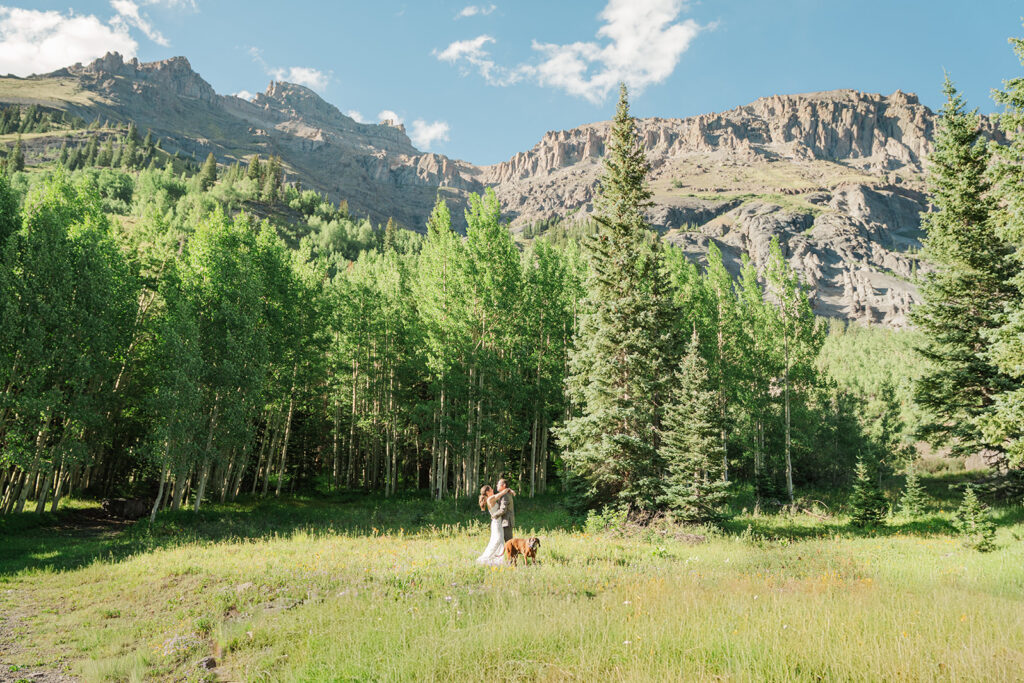
But I think the pros definitely outweigh the cons! An off-roading elopement is totally worth it because…
- You “earn” the view. Breathtaking views are even more rewarding when you have to adventure a little to reach them!
- You’ll get privacy in amazing locations. Some of the most incredible, intimate ceremony spots can only be reached by off-roading. And you’ll completely lose the crowds – so there’s no risk of tourists walking through your vows.
- The drive becomes part of your story. The adventure to get to your spot because part of your story and the memories of the day!
- You can find epic views without a strenuous hike. Off-roading opens access to a ton of locations that would be super difficult to reach on foot. If you’re not an extreme hiker, off-roading is another way to get to the top of the mountain.
When Should You Have an Off-Roading Elopement?
The timing of your off-roading elopement hinges on one super important factor: when off-roading trails are accessible.
Off-roading trails are usually high up in the mountains, where it can snow half the year (and they’re definitely not plowed). Even after the snow melts, trails can be unsafe if it’s muddy – there’s a big risk of getting stuck!
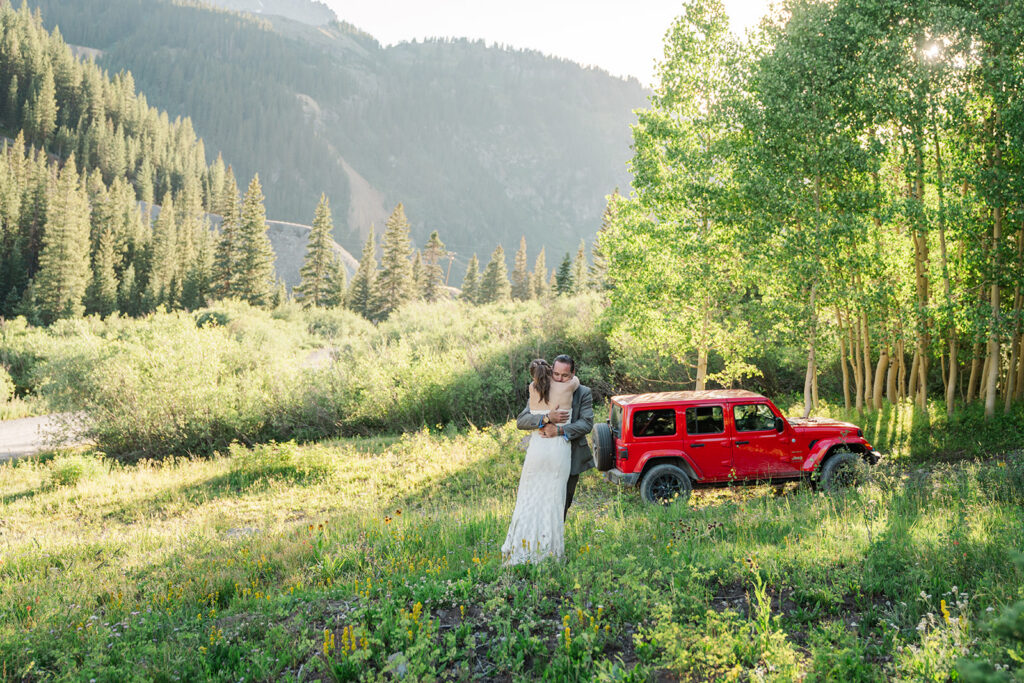
The best season for an off-roading elopement is usually from July to September, but it’s possible to elope in the early or late season with the right planning and flexibility.
It’s also important to remember that conditions can be drastically different depending on elevation – trails at 12,000 ft will have snow earlier (and longer) than trails at 8,000 ft.
Early Season (May to June)
- Many high alpine passes will still be covered in snow
- Snow drifts can block some roads until July
- Muddy conditions are a risk
Peak Season (July to September)
- Most high-elevation trails are accessible
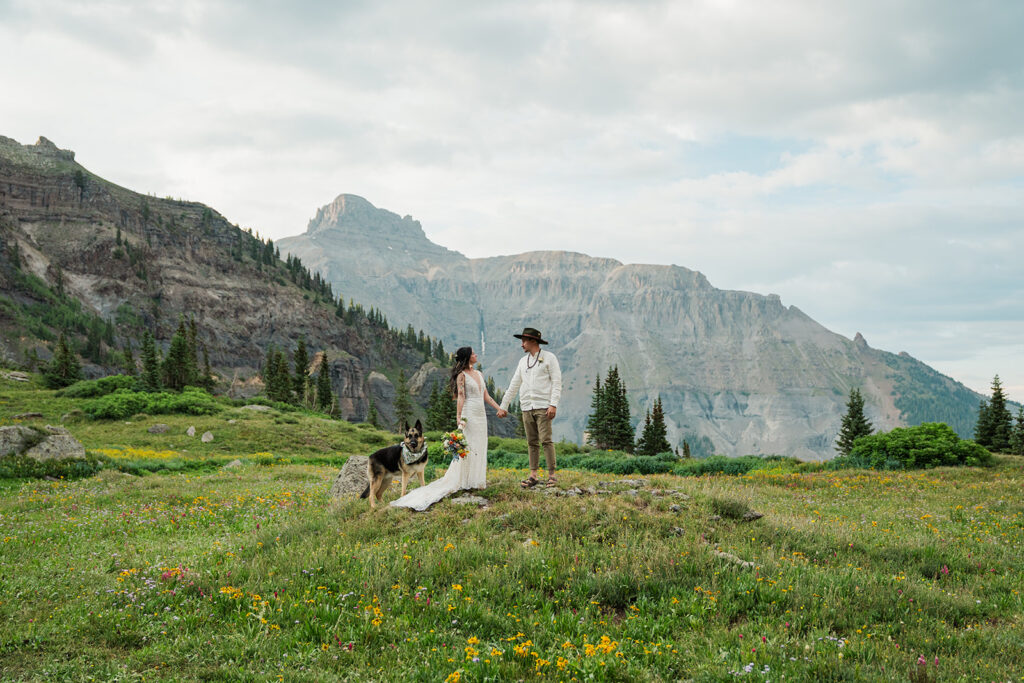
- Peak wildflower bloom happens in mid-summer
- Afternoon thunderstorms are common
Fall Season (Late September to October)
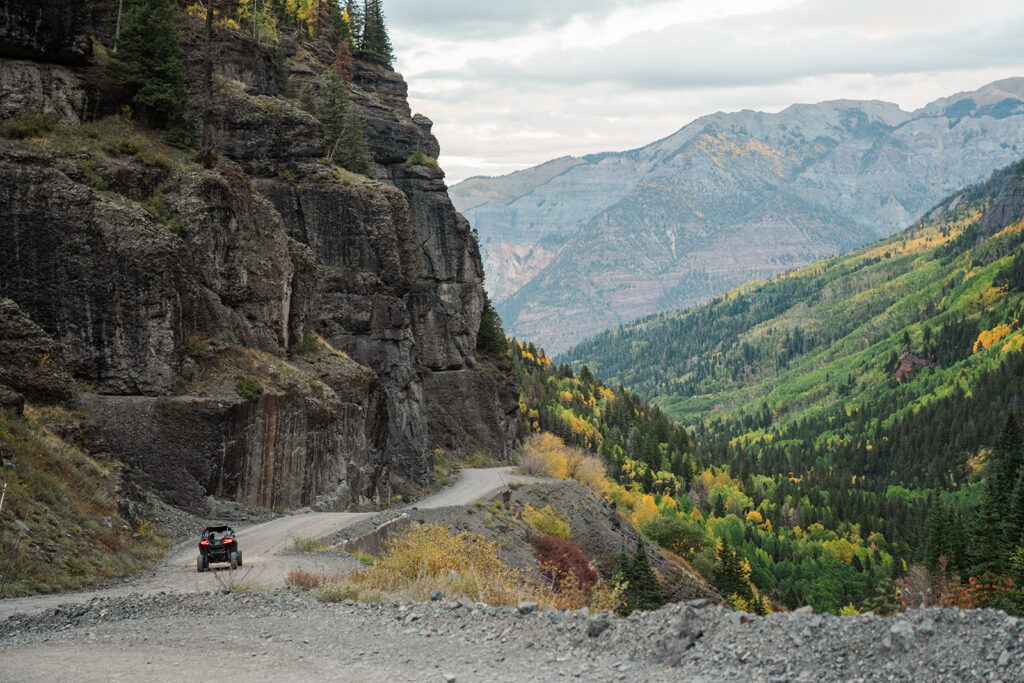
- Amazing fall colors and golden aspens
- Fewer crowds after peak season
- Early snowstorms are possible in October
- Many passes close after the first heavy snow of the year
Understanding Different Types of Off-Roading Trails
AWD-Friendly Roads vs. High-Clearance 4×4 Trails
When you’re choosing a location for your off-roading elopement, it’s important to understand how trails are classified.
Not all dirt roads are true “off-roading trails” – and true off-roading trails can’t be tackled in just any car! So what’s the difference?
AWD-Friendly Roads
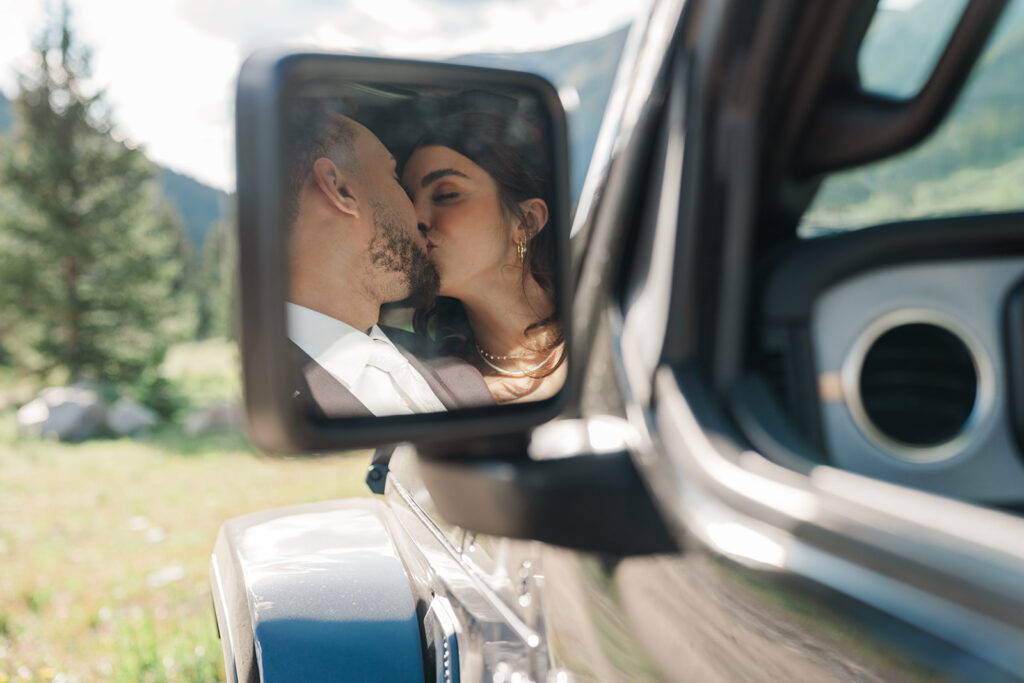
AWD-friendly roads are maintained dirt roads with mild inclines and no large rocks or ruts. They’re ideal for couples who want to adventure way out into nature for their elopement, without technical off-road driving.
Of course, you still need to make sure your car is up to the task. You can safely traverse most AWD-friendly roads in an SUV with decent clearance and all-wheel drive. But rental crossovers often don’t have enough clearance – the distance between the ground and the lowest point of the car’s undercarriage.
If you’re planning on driving some AWD-friendly roads during your elopement, it’s not a bad idea to rent a Jeep (or something similar) to make sure you’re covered.
High-Clearance 4×4 Trails
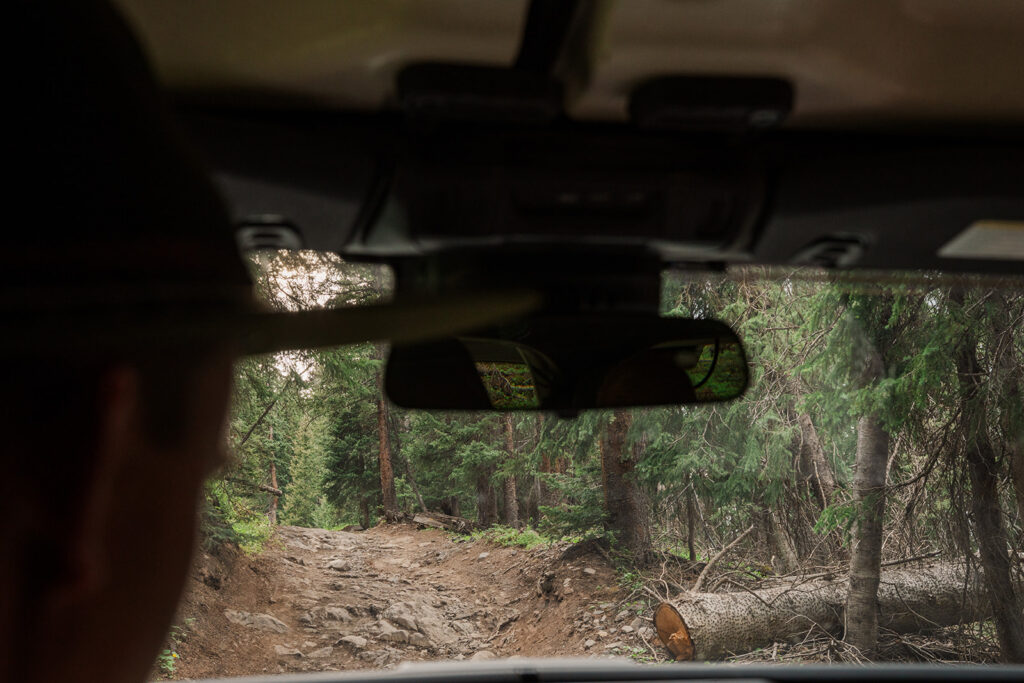
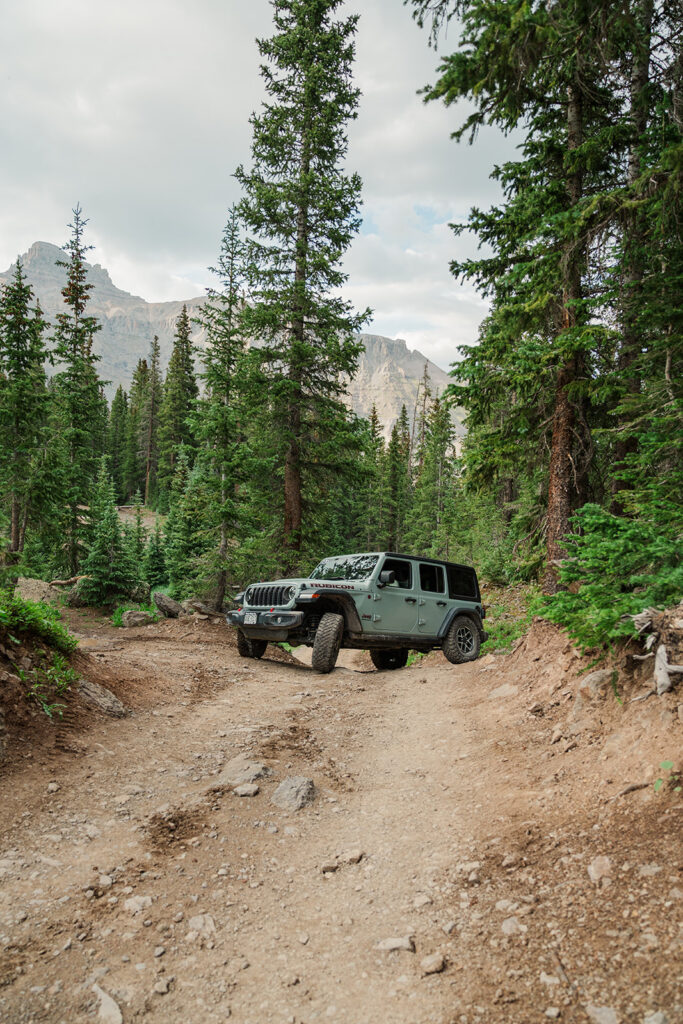
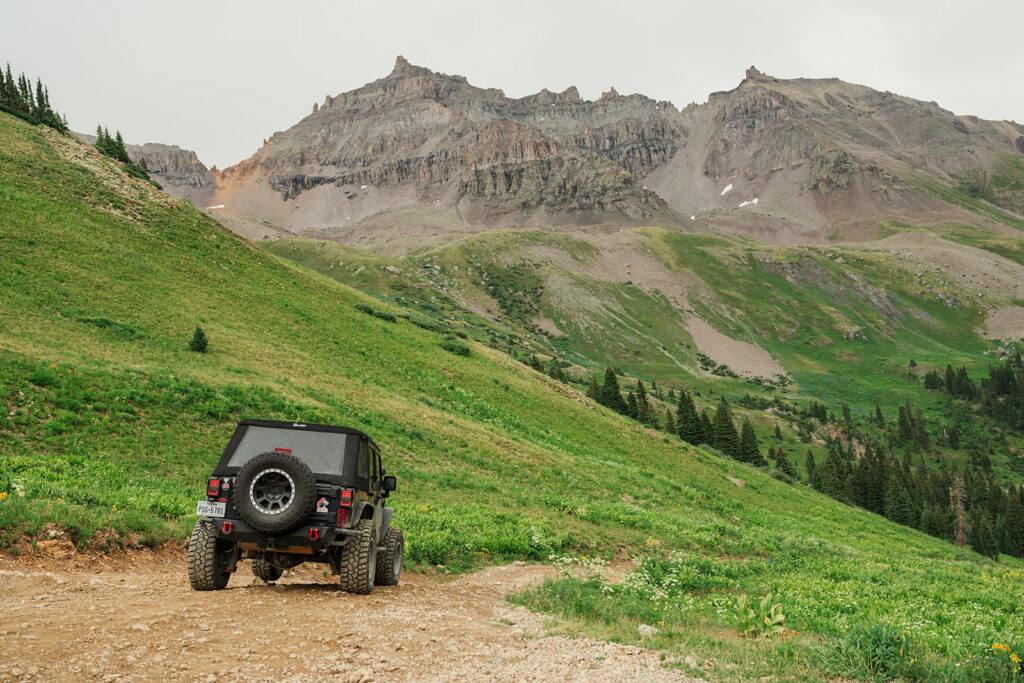
True “4×4” or “4WD” trails can have large rocks, ruts, water crossings, steep hills, and very narrow areas with sharp drop-offs. If that sounds a little scary, it’s because it can be! 4×4 trails require more technical driving know-how and experience to safely navigate.
It’s especially critical to have the right vehicle on 4×4 trails. Your car should have four-wheel drive (NOT just all-wheel drive), high ground clearance, and for many trails, a short wheelbase (so no trucks). Clearance is crucial here – some smaller SUVs (like Outback/Crosstrek or Rav4) will struggle on a true 4×4 trail because they don’t have enough clearance to go over obstacles and ruts.
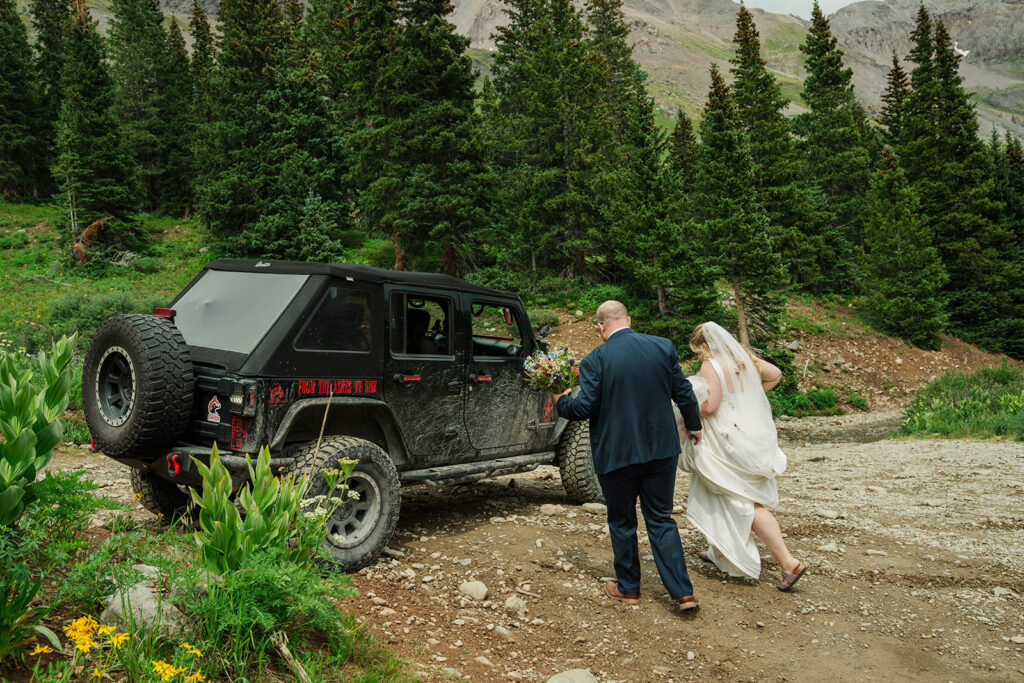
If you’re planning to tackle a true 4×4 trail during your off-roading elopement, I’d recommend renting a Jeep Wrangler from a company that specializes in off-roading rentals. Their Jeeps will have features like bigger tires and lift kits, making them safer for off-roading than anything you can rent at the airport.
Off-Roading Trail Examples
What does an AWD-friendly road vs. a true 4×4 trail look like?
The area around Crested Butte, Colorado is great for AWD-friendly roads, with well-maintained options like Kebler Pass.
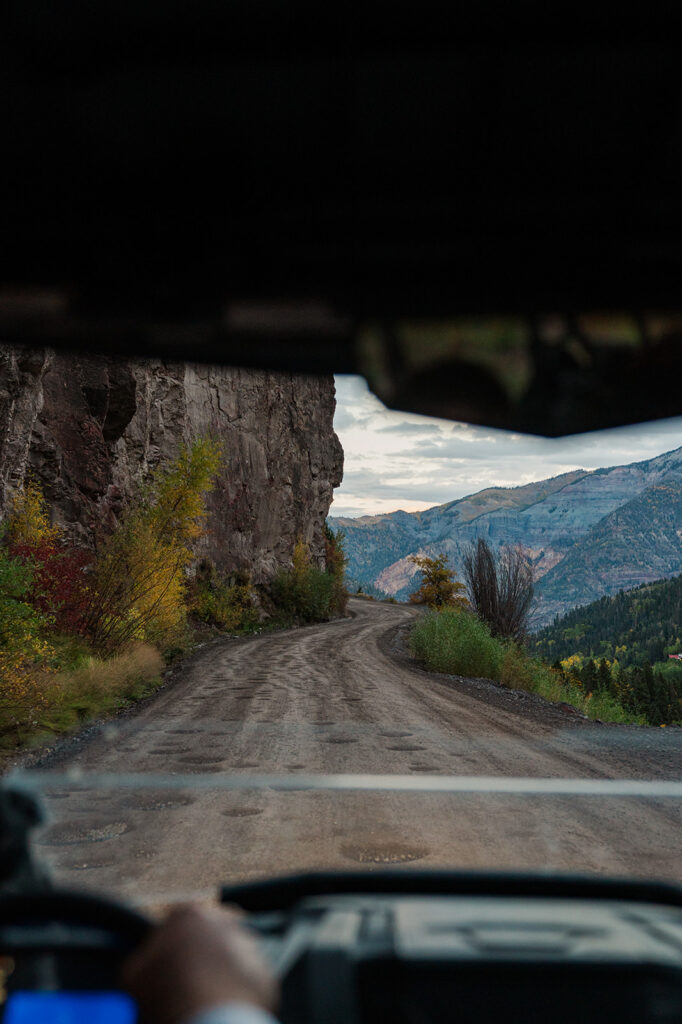
If you’re looking for true 4×4 trails, Ouray and Telluride are both well-known for off-roading, with famous mountain passes like Imogene Pass and Ophir Pass.
Important Off-Roading Terms to Know For Your Elopement
Ground clearance: The distance between the ground and the lowest point of your vehicle’s undercarriage.
Wheelbase: The distance between your vehicle’s front and rear wheels. A shorter wheelbase is better for tight turns and technical off-roading.
Shelf road: A narrow mountain road with a steep drop-off on one side.
Switchbacks: Sharp zig-zag turns up or down the side of a mountain.
Low range (4L): 4WD gear setting for driving through steep grades or tricky terrain.
Air down: Lowering tire pressure (releasing some air from the tires) to increase traction.
Spotting: A person standing outside the vehicle, guiding the driver over obstacles or through difficult parts of the trail.
Rock crawling: A type of technical off-roading that involves driving over extremely rocky terrain (like rock piles, boulders, or slickrock).
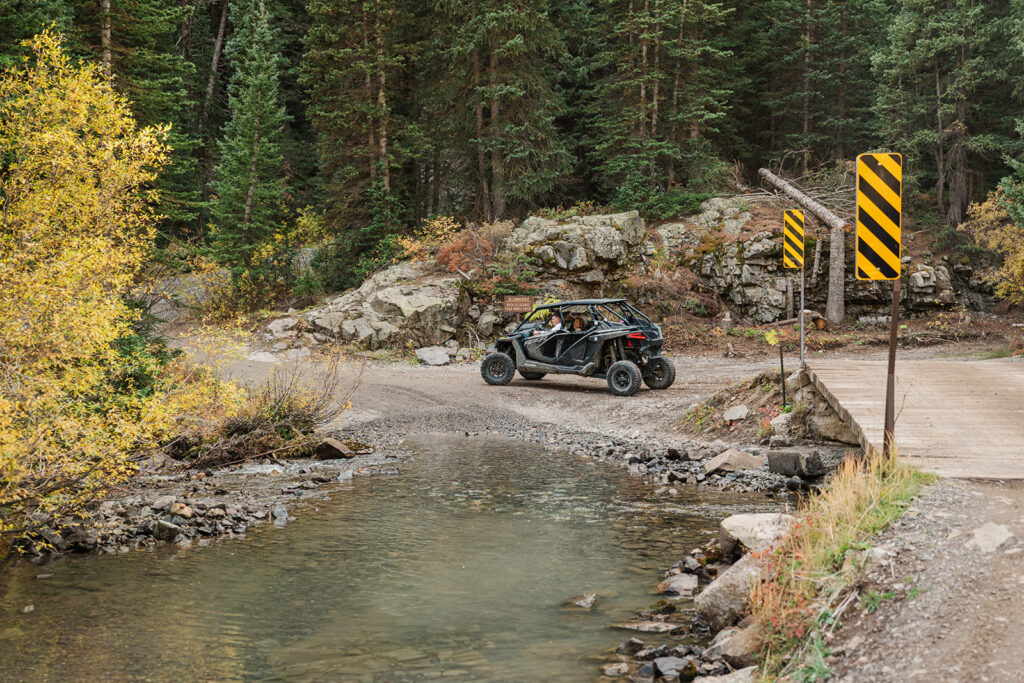
Side by side (SxS): An open-air off-road vehicle that’s kind of a hybrid between a Jeep and an ATV.
Driving Yourselves vs. Hiring an Off-Roading Guide
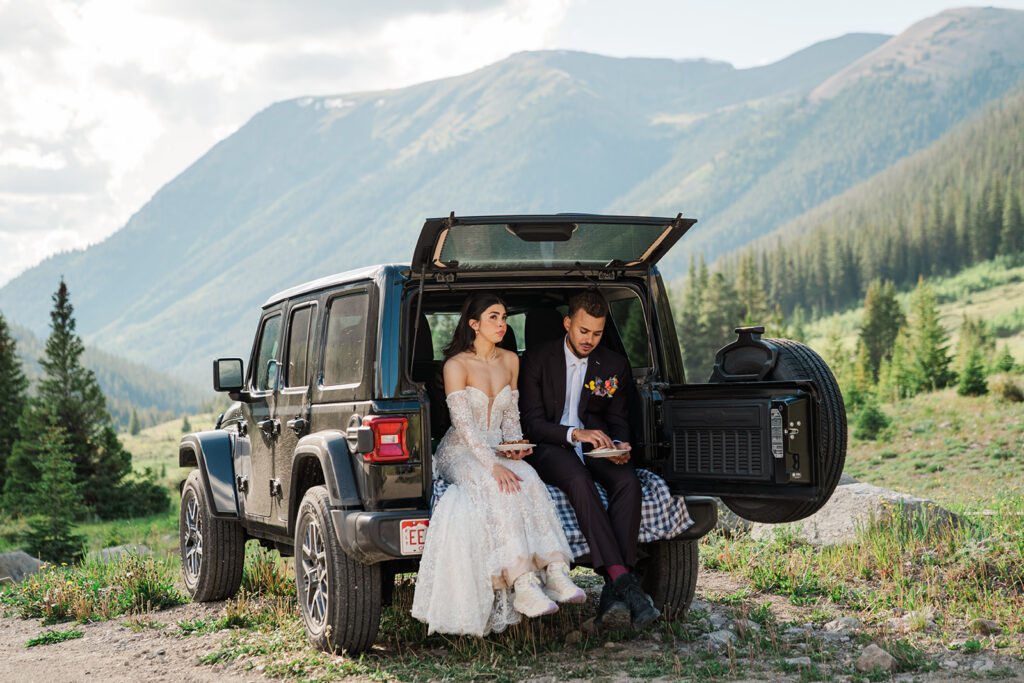
Another key question when planning your off-roading elopement is deciding whether to drive yourselves, or hire a local guide. There are some pros and cons to each option!
Option 1: Drive Yourselves
Pro: Full flexibility
You’re not limited by someone else’s schedule or a reservation time! You can pivot to a different trail, take a long unplanned break, or change your itinerary at the last minute.
Pro: Feels like an adventure
Off-roading is fun and adventurous, and driving yourself is part of the thrill! You might not want to give that up for a chill backseat ride.
Con: Can be stressful if you’re inexperienced
If you’ve never been off-roading, navigating trails and worrying about obstacles can cause anxiety (on what should be a stress-free day).
Con: Liable for vehicle damage
There’s always a risk of vehicle damage when off-roading (even something small like scratching the paint job). If you drive yourself, anything that goes wrong is on you – and that can be especially stressful if you’re in a rental!
Option 2: Hire a Local Off-Roading Guide
Pro: Zero stress
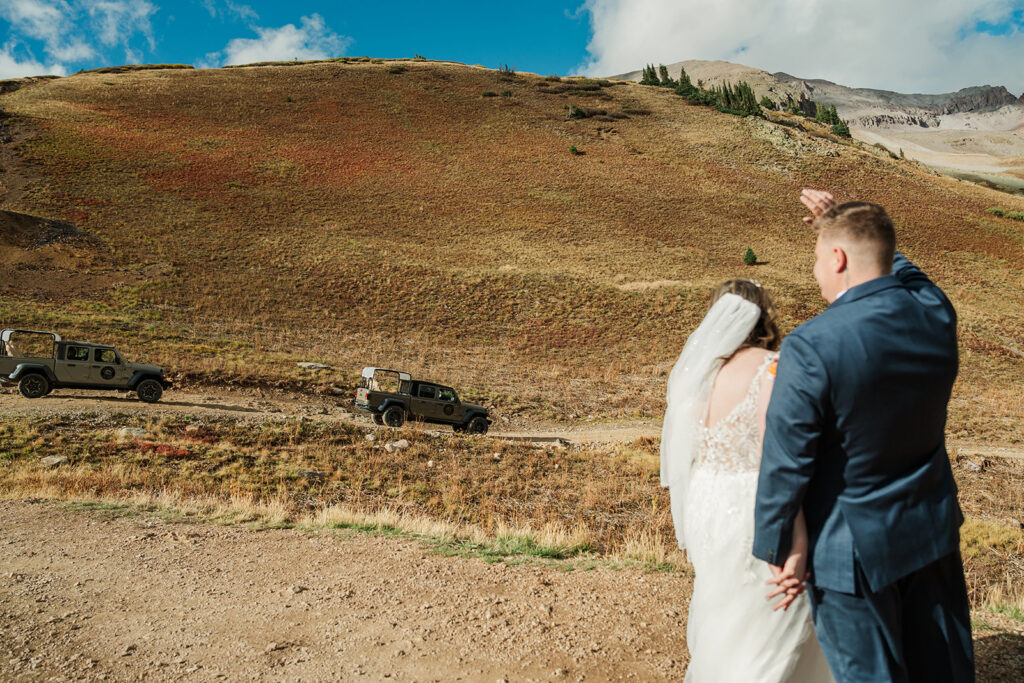
There’s a lot to think about when you’re planning an elopement – hiring a driver can take one thing off your plate! And having less responsibilities on your elopement day means you can truly relax and enjoy the time with your partner. Especially in Colorado, drivers are used to people eloping and know how to put together custom packages and give privacy when needed.
Pro: Local terrain knowledge
A local guide will be more familiar with the terrain, and ready with a back-up plan or an alternative trail if something unexpected happens.
Pro: Safer navigation
Off-roading guides are super experienced drivers, ready to handle tricky terrain, rutted roads, and unexpected conditions like mud or rain. That means less things that could possibly go wrong and put a damper on your day!
Con: Added cost
Hiring a driver is an additional cost to factor into your elopement budget. Private Jeep tours in Colorado start at about $250 and can go up to $1,000, depending on the length, time of year, and number of guests.
Con: Slightly less spontaneity
You’ll have a stricter time limit and less ability to make last-minute changes if someone else is in charge of the driving.
How to Leave No Trace During Your Off-Roading Elopement
What is Leave No Trace, and why does it matter?
Leave No Trace is a set of 7 principles for recreating responsibly in nature.
Following Leave No Trace rules is a non-negotiable part of any elopement in nature, including an off-roading elopement. We’re all responsible for protecting the natural environment so we can keep enjoying it!
How do you follow Leave No Trace rules during an off-roading elopement?
There are a few Leave No Trace principles that are particularly applicable to off-roading elopements:
Travel & Camp on Durable Surfaces
For an off-roading elopement, this means staying on established roads and trails, and not driving onto tundra or fragile alpine vegetation. Just because you’re in a 4WD vehicle doesn’t mean you can drive wherever you want!
Dispose of Waste Properly
Pack out everything you pack in. This is pretty easy during an off-roading elopement because you’re in a vehicle (so there’s no excuse)!
Respect Wildlife
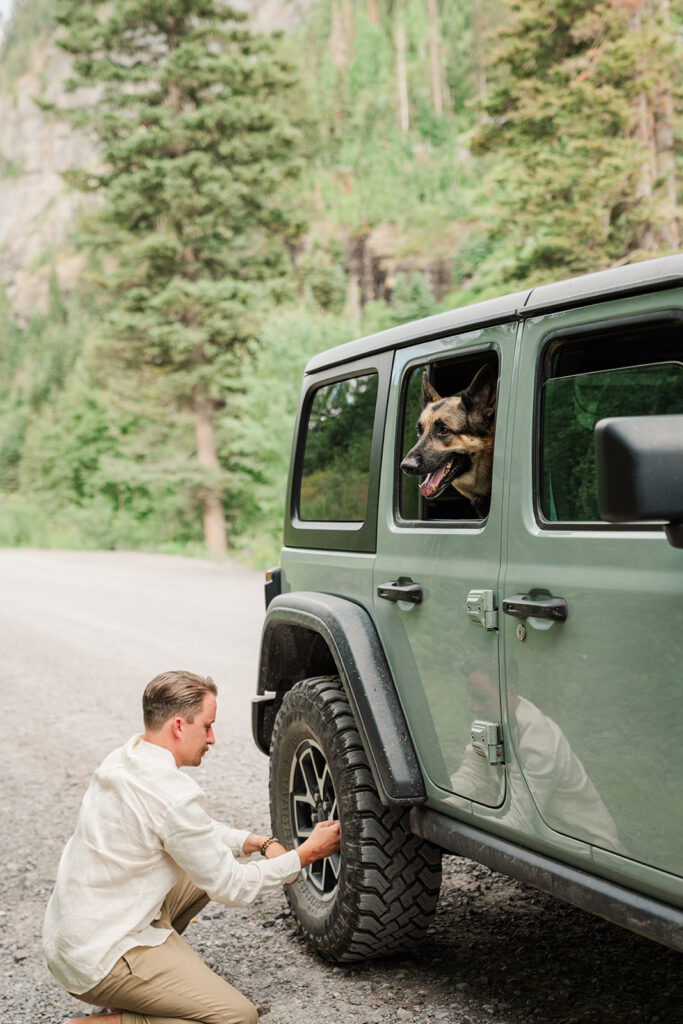
If you see wildlife during your off-roading elopement, don’t feed or approach them. And if you’re bringing your dog along, keep them on-leash and under control.
Be Considerate of Others
During an off-roading elopement, this means minimizing noise and yielding to others on the trail.
What to Wear for an Off-Roading Elopement
Off-roading elopements give you a little more flexibility with your wedding attire than an activity like hiking, where range of motion and high-traction footwear is key. But you’ll still want to be prepared for the conditions at the top of a mountain pass!
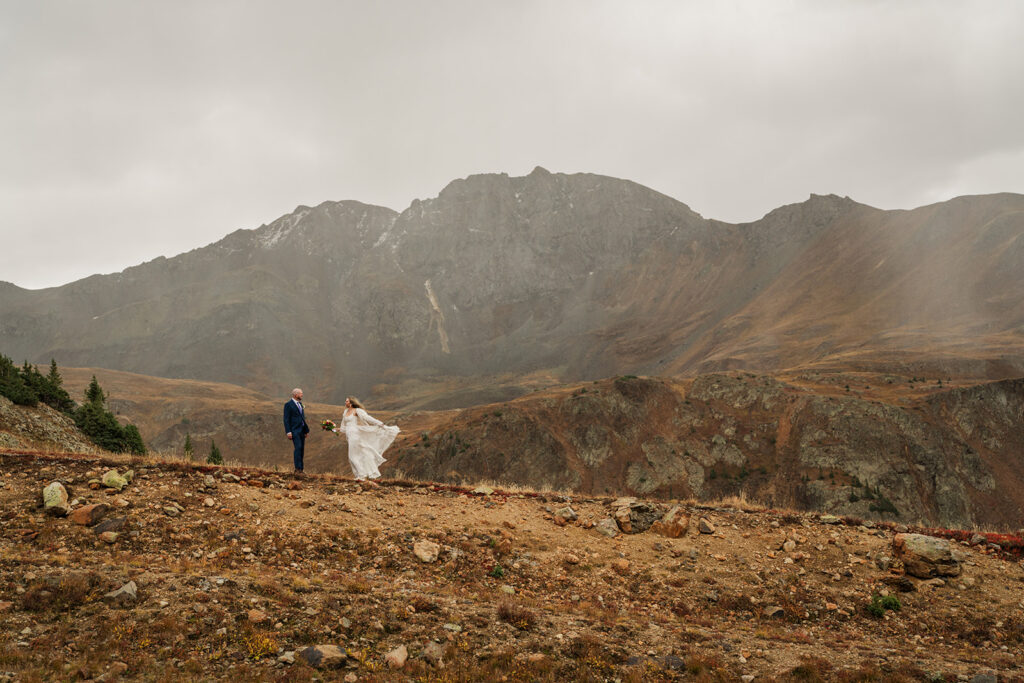
- Dresses with flowy skirts that move in the wind are a good (and romantic) choice for an off-roading elopement. Mountain passes are often windy, so you can take advantage of that for some cool, dramatic photos. Plus, tight skirts are harder to move around in (and get in and out of a Jeep).
- Make sure your veil is super secure – or skip it completely! It’s easy to lose a veil on a windy ridge.
- If you have long hair, consider updos or braids if you don’t want it to whip around in the wind and get tangled.
- Opt for close-toed, sturdy shoes – even if you’re not planning to do much hiking, the terrain along off-roading trails can be uneven and muddy.
- Pack layers (even in the summer). The weather at high elevations is unpredictable all year round, from huge temperature fluctuations throughout the day to afternoon thunderstorms. It’s a good idea to bring both light, waterproof layers and warm jackets just in case.
Important Safety Tips for Off-Roading Elopements
01/ Tell someone your location
Make sure someone you trust knows your detailed elopement day itinerary. If you get stuck in the middle of nowhere, they’ll be able to direct emergency services to retrace your steps so you’re not stranded.
02/ Check the weather forecast at elevation
Weather can vary hugely between the mountain town you’re staying in, and the top of a pass that’s thousands of feet higher in elevation. Make sure you check the weather forecast for your off-roading destination so you’re prepared for whatever conditions your elopement day will hold.
03/ Bring water
Most off-roading trails won’t have any access to clean drinking water along the route. Bring lots of extra water – both for the day you’ve planned, and in the (very unlikely) event you get stuck.
04/ Prepare for limited cell service
As a rule of thumb, plan not to have any cell service while you’re on the trail. Make sure any maps you need are downloaded and/or printed, and that you have a plan in place if you’re meeting up with vendors (like a guide or a photographer).
05/ Build extra time into your itinerary
Off-roading can be slow going, and you may want to stop for breaks or to take in a cool view! Make sure you build in plenty of buffer time between your off-roading adventure and whatever else you have planned for your elopement day (like a dinner reservation).
Other optional safety items
It’s never a bad idea to have extra safety tools!
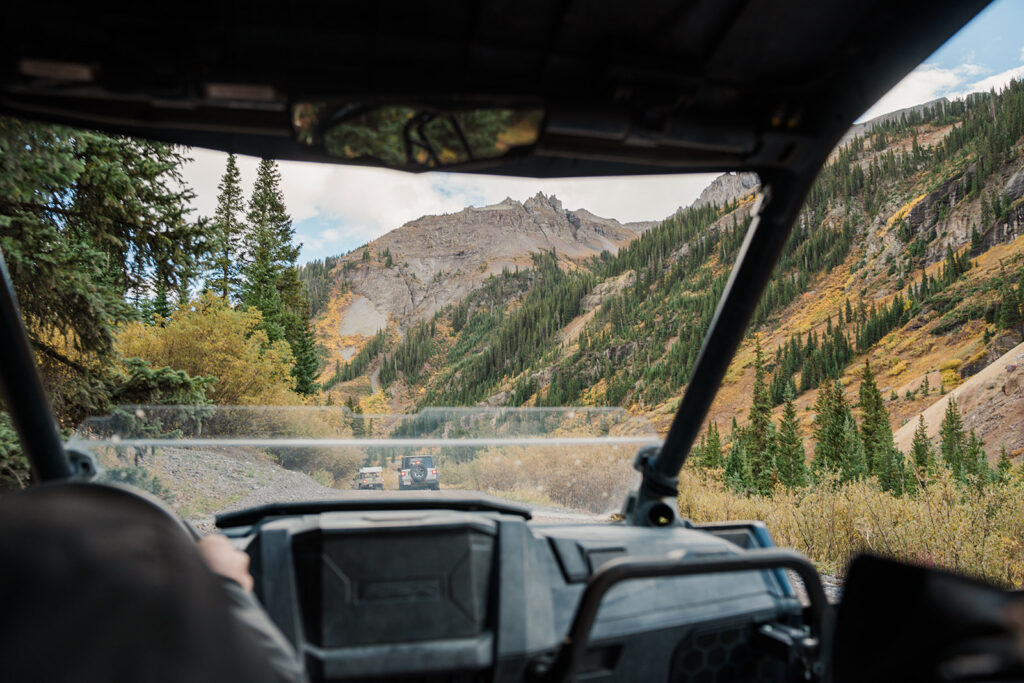
- A satellite communicator to send messages out of cell service
- A full-size spare tire
- An “emergency kit” with items like extra food and water, first aid supplies, a fire extinguisher, an air compressor, and a recovery strap
Sample Off-Roading Elopement Timeline
2:00pm Photographer arrives at cabin
2:15pm-3:30pm: Detail photos and final touches of getting ready
3:30pm-4pm: First look and pack the car
4:00pm-5:00pm: drive from Cabin to ceremony location
5:10-5:30pm: Ceremony
5:30pm-6:15pm: Golden hour couples photos
6:30pm-7:15pm: Picnic
7:30pm-8:30pm: Drive to second location and golden hour couples photos
8:30pm-9:30pm: Drive back to cabin
9:45pm-10:15pm-ish: Star photos!!!
See how the whole gallery turned out here!
Off-Roading Elopement FAQs
01/ Do I need a Jeep to elope in Colorado?
Nope! A Jeep is certainly a good car to rent for your Colorado elopement – but you can totally get away with an AWD crossover on lots of mountain roads.
02/ Are off-roading elopements safe?
Yep! Off-roading elopements definitely have some risks – but so do most adventurous activities. And you can do a lot to mitigate those risks by preparing ahead of time, choosing the right vehicle, and picking a trail that’s suited to your experience level.
03/ What if it rains?
The best thing to do is check conditions before you head out, and alter your plans if there’s heavy rain or flash flooding in the forecast.
If you do get caught in an unexpected storm, don’t panic! Drive slowly and carefully, and avoid deep water. If things get really intense (or if you’re nervous), you can always pull over and wait for the rain to stop.
04/ Can we bring guests with us?
Totally! If you’re driving yourself, you can bring however many guests fit in your vehicle (or take more than one car). If you’re hiring a guide, there are options for groups of all sizes, including some 4×4 trucks that carry up to 10 people.
05/ Are dogs allowed on 4×4 trails?
Generally, yes! Dogs are allowed pretty much anywhere inside national forests, where many off-roading trails are located.
Why Hiring a Local Photographer Matters for Your Off-Roading Elopement
My number one tip for planning a stress-free off-roading elopement? Hire a local elopement photographer and planner (like me!) who’s already familiar with the place you’re eloping.
Here are just a few of the things a local planner brings to the table for your off-roading elopement…
- Knowledge about trail conditions (and how to navigate them safely)
- Familiarity with seasonal trail closures, to help you choose the best time and place to elope
- Backup plans in case anything unexpected happens on your elopement day
- Understanding of wedding ceremony permits and rules for different off-roading spots
- In-person location scouting before your elopement day, to check conditions and find the perfect backdrop for your ceremony






read & Leave a comment
Comment Form